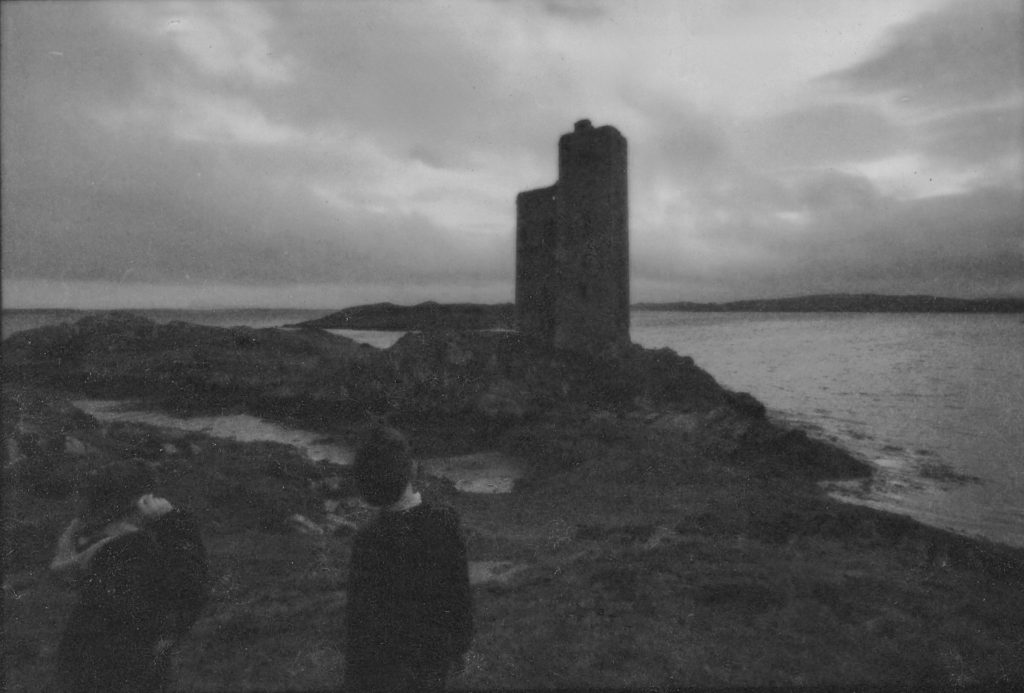
photographed by Adrian Flowers 1970
Remembering Mark Wycliffe Samuel, archaeologist and artist,
20 Dec 1957 – 10 Nov 2025
Over a career spanning four decades, Mark Samuel worked on the recording and preservation of many ancient buildings in England and Ireland. A self-taught artist, he attended Dartington Hall School in the mid-1970’s, before studying archaeology at University College London. His first job was as an draughtsman on the Haddenham Project in Cambridge, and he later worked at the Museum of London, before setting up his own company, Architectural Archaeology, where he produced academic reports illustrated with his own historical paintings and dioramas. The author of The Tower Houses of Cork–a book based on his doctoral thesis of 1998–Samuel also wrote an account of Coppinger’s Court in West Cork, for the Journal of the Cork Historical and Archaeological Society. His definitive account of Blarney Castle was published in 2008 by Cork University Press. Samuel’s studies of buildings in England included Winchester Palace, the Augustinian Priory at Merton, Selborne, London’s Guildhall, Blackfriars, and Westminster. In January 2008 he was elected a Fellow of the Society of Antiquaries. At the time of his death he was working on a book on Julius Caesar’s invasions of Britain. Samuel lived in Ramsgate, near to his two sons, Ned and Fineen. His was pre-deceased by his wife Kate Hamlyn, who died in 2017.
Coming from a family steeped in architecture, Samuel had grown up surrounded by books and paintings. An influential Modernist architect and committed Communist, his father Edward was the grandson of a Polish immigrant, Max Samuel Lubinski. Edward met his wife Stella (née Helps) when both were studying at the Architectural Association, and over the years following the couple worked mainly worked on housing, including designing and developing a Modernist terrace at Southwood Lane in Highgate, as well as houses in West Cork. They had four children, Zachary (who died young), Tom, Mark, and Flora. While Mark pursued a career as illustrator and expert in historic building conservation, his sister Flora also followed in the family tradition, becoming a senior lecturer in architecture at Cardiff University. Both inherited the idealism of their father, as evidenced by Flora’s book Housing for Hope and Well-Being, and by Mark’s lifelong commitment to conservation and restoration. During the second half of the twentieth century, in both London and West Cork, the lives and fortunes of three families, the Samuels, Flowers and Stutchburys, were to become closely intertwined.
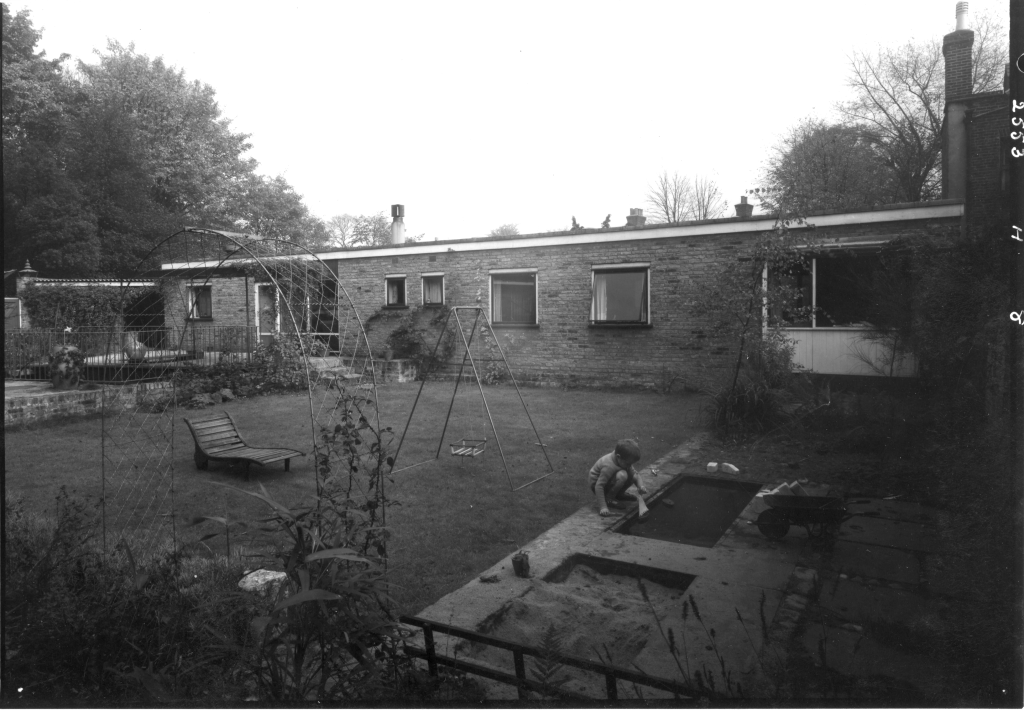
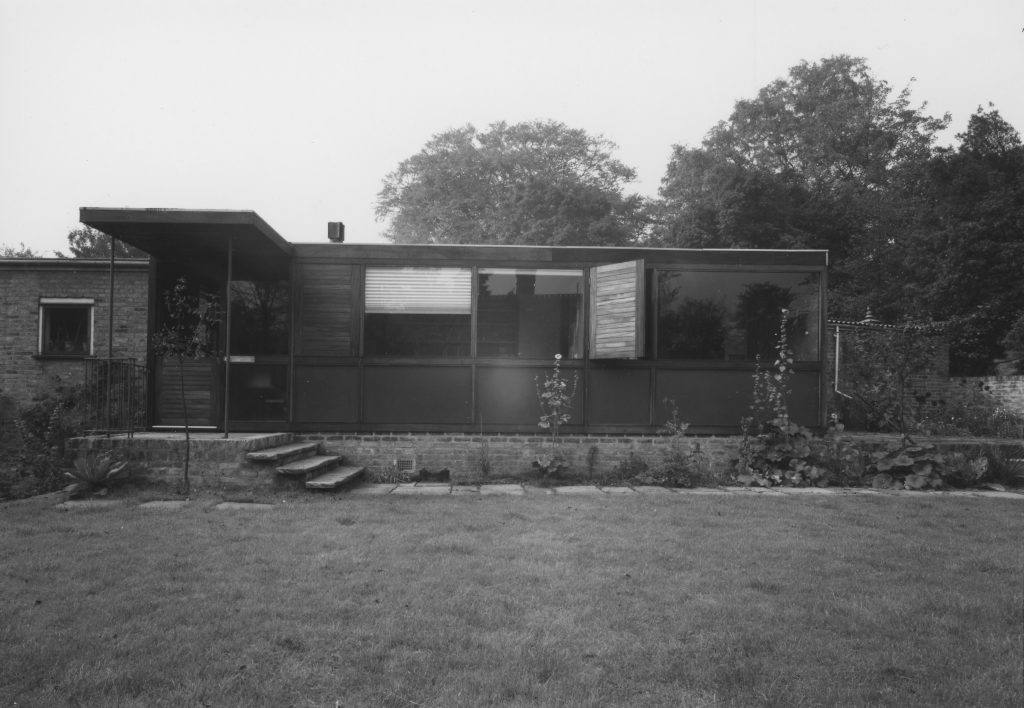
Photographs above by Adrian Flowers in 1957: Edward Samuel demolished his own self designed bungalow to replace with a terrace of brick townhouses in Haringey designed by him.
As so often happens, the friendship between the Samuel and Flowers families initially began with their children attending the same primary school in Highgate. In 1954 the Samuels had bought Curlew Cottage in Rosscarbery, West Cork. There was already a family connection with the area; Stella’s parents, Elfie and Edmund Helps, lived at Cregane, a large Tudor-revival house set in the woods above the Warren Strand at Rosscarbery. Born in Hampstead in 1888, Edmond was a descendant of Sir Arthur Helps, a social reformer and friend of Ruskin, who had married into the Blennerhasset family of Co. Kerry. A confidante of Queen Victoria, he would say things like ‘The rich are always advising the poor; but the poor seldom return the compliment.’ Around 1925, Edmund married Lucy Laura Wycliffe-Taylor, or ‘Elfie’, and they had four children, Peter, John, Stella and Ann. While Stella went on to marry Edward Samuel, Ann married Peter Thornton, curator of the John Soane Museum. Ann and Peter had three girls, Emma, Minna and Dora. Elfie’s son John remained living at Cregane.
In time, the family connections extended to include the Stutchburys, as Elfie’s sister Rosamund married Mervyn Stanley Stutchbury a mining engineer who had retired to West Cork. They had one daughter and four sons; Laura, Dombey, Oliver, Wycliffe and David. Their son Wycliffe, or ‘Winkie’, went on to become an architect, and, like Ed Samuel, specialised in Modernist houses. He had two daughters, ‘Bena’ and Jessica with Natalie, and two step-sons, Oliver and Jamie Nares, from Natalie’s first marriage.
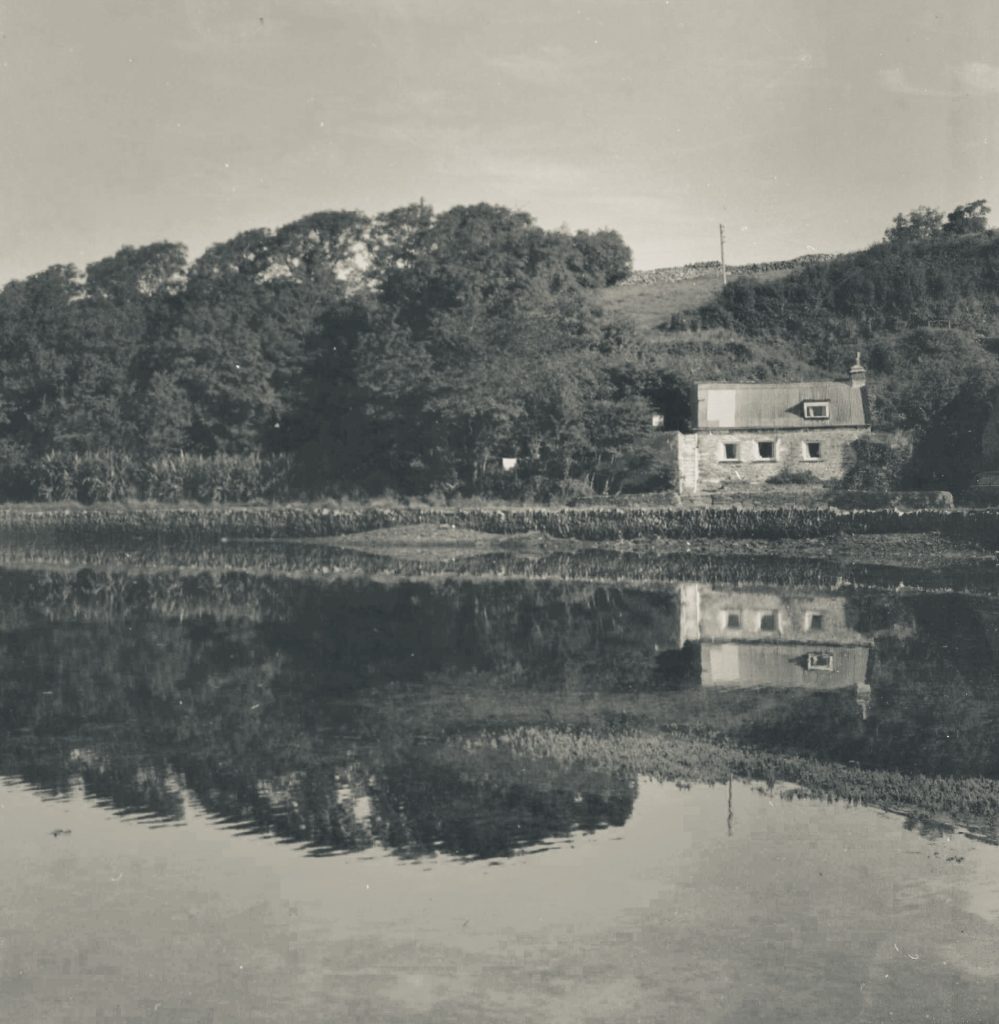
Photograph by Adrian Flowers
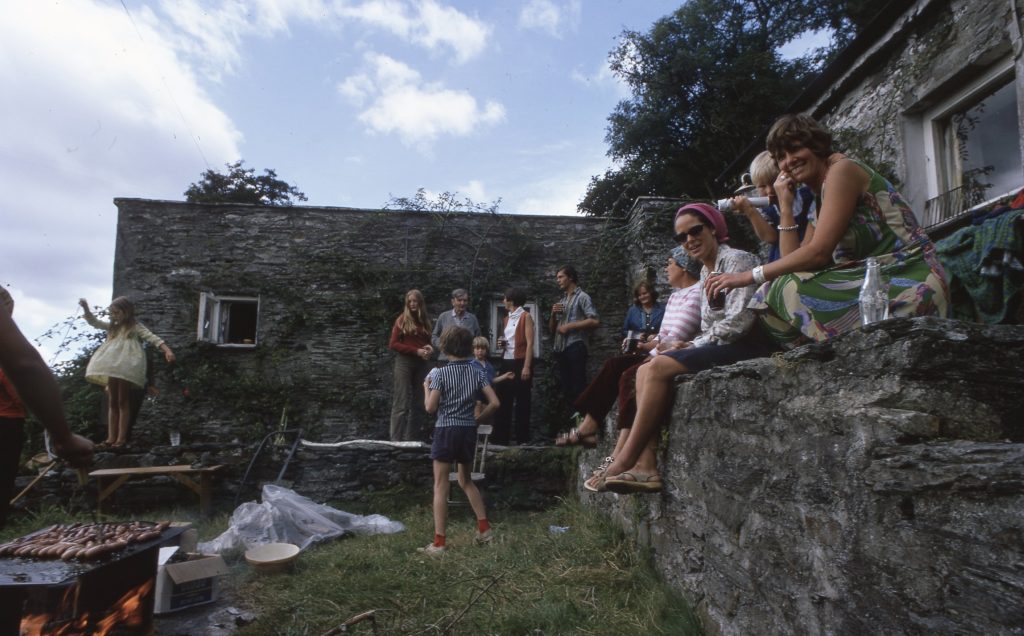
In 1958, Stella and Ed Samuel invited Angela and Adrian to holiday at Curlew Cottage. It was the Flowers’ first encounter with life in West Cork; barbeques in the garden, picnics at the Long Strand, fishing for mackerel, parties at Cregane, and pints in the local pub. Elfie was delighted with the new arrivals, and immediately set about finding a cottage that they could buy. She came up with a gem, Downeen, a two storey cottage overlooking Rosscarbery Bay. Adrian and Angela bought the cottage in 1959. Full of ideas and projects, Stella and Ed never stopped working, their house was a hive of activity, with Ed designing houses in the locality; including one at Warren Strand, for Allen Lane of Penguin Books, a bungalow for Ben and Catherine Prowse, and in 1967, a house at Carrigilihy for Oliver Knox.
In June 1969, Ed Samuel contacted Angela Flowers to say he had been asked to find a tenant for a space alongside his office at Portland Place in Soho. Would she consider opening a gallery there? Angela approached Adrian Heath, Len Deighton and Courtauld, asking if they would support the venture; they agreed, but she had no luck in securing more investors, so the idea stalled. At the funeral of Mary Martin several months later, Angela bumped into Heath. He asked if she was still interested in opening a gallery, and explained that the lease of AIA, of which he was chairman, was due to expire in eighteen months’ time. The AIA offices were in Lisle Street. The Angela Flowers gallery was an instant success, and when the lease at AIA expired, she transferred it to Portland Mews, above the Samuels’ architectural offices, further cementing the connection between the two families. [See post on Angela Flowers for more information: https://adrianflowersarchive.com/angela-flowers/]
During his teens, Mark spent many summers at Rosscarbery, where his interest in ancient buildings was encouraged both by his parents and by local scholars such as Fr. James Coombes of Skibbereen. One of Ed’s unrealised projects in West Cork was the restoration of Kilcoe Castle, overlooking Roaringwater Bay, a tower house he purchased from a local farmer. Mark Samuel did detailed drawings of Kilcoe Castle. Lucy Freeman, a friend of the family, remembers having to hold the tape measure as he measured each individual stone. Having later inherited Kilcoe Castle from his father, and realising that its restoration was beyond his means, Samuel sold it on to Jeremy Irons, who, closing the circle, employed Bena Stutchbury, daughter of Winkie, to oversee the magnificent restoration of this historic building.
Text: Peter Murray
Editor: Francesca Flowers
All images subject to copyright.
Adrian Flowers Archive ©
Further information on Mark Samuel:
https://www.directoryofillustration.com/artist.aspx?AID=16558